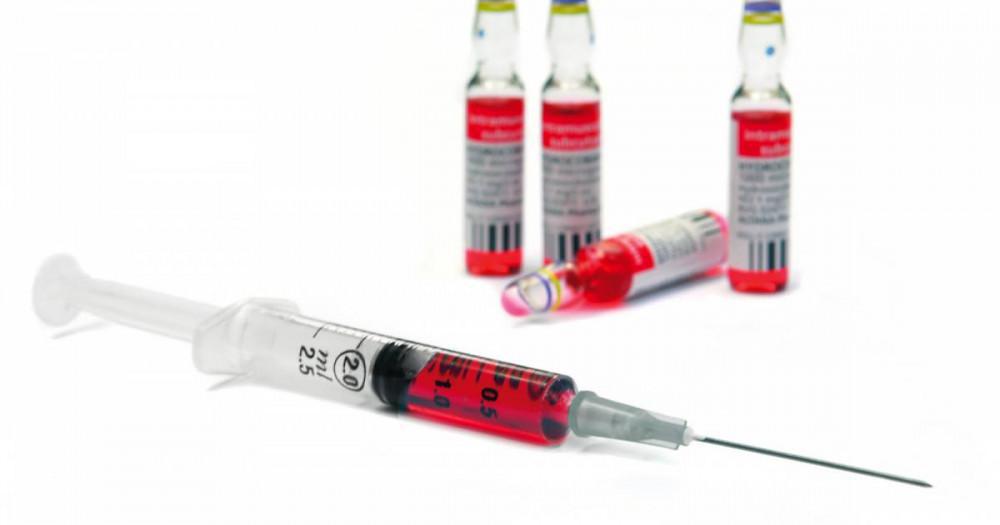
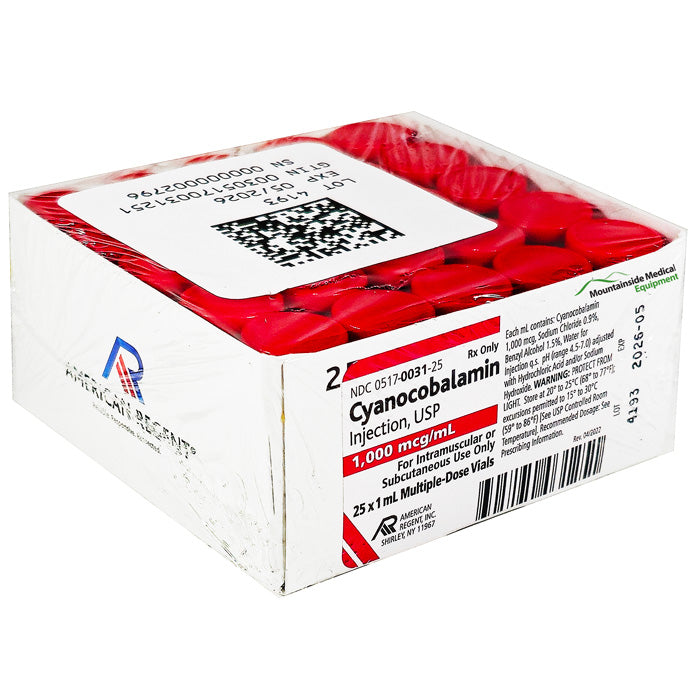
By mandating a prescription, healthcare professionals can ensure that B12 injections are used appropriately and safely, taking into account individual health status and medical history
Stable up to 24 months
Vitamin B12 injections are primarily used to: Treat or prevent vitamin B12 deficiency Manage pernicious anemia Support patients with malabsorption disorders Aid those with dietary restrictions, such as vegans or vegetarians Offset vitamin loss due to medications like metformin or proton pump inhibitors (PPIs)
Slowly and gently depress the plunger, letting the water run down the inside wall of the vial and pool at the bottom
Symptoms of B12 deficiency may include Megaloblastic anemia (large red blood cells with abnormal nuclei) Fatigue Paleness Heart palpitations Dementia Weight loss Infertility Numbness and tingling in hands and feet Depression, mania, delirium, psychosis Poor pregnancy and breastfeeding outcomes (neural tube defects, developmental delays, failure to thrive, anemia in offspring) Low red and white blood cell counts or platelets Glossitis of the tongue Erectile dysfunction or bowel/urinary incontinence Recommended Daily Intake for B12 Recommended Dietary Allowance (RDA) Daily B12 requirements depend on age, sex, and dietary intake (5) Assessing B12 Status Typically serum B12 levels are used to determine vitamin B12 deficiency (keep in mind normal value ranges may vary slightly depending on the laboratory)
Some formulations of sodium chloride 0.9% may also contain preservatives for multi-dose use, while others are preservative-free single-use vials